Watengwa ft. Eli Hekima Mitaa Imetulea MP3 Download
| Information | Details |
|---|---|
| Title | Mitaa Imetulea |
| Main Artist | Watengwa |
| Featured Artists | Eli Hekima |
| Genre | Hip Hop |
| Music Origin | Tanzania |
| Release Date | |
| BPM | 117 |
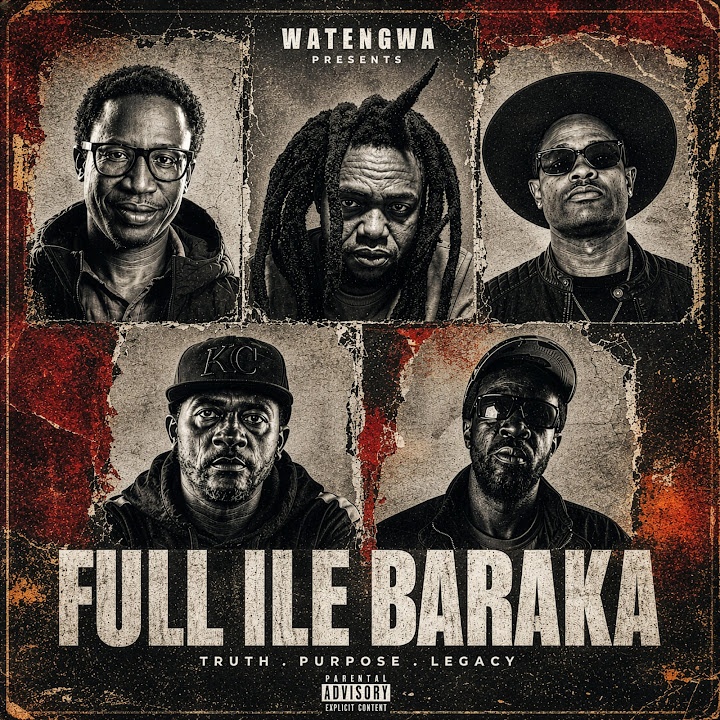
| Featured In | Album: Full ile Baraka EP |
| Duration | |
| Copyright | © 2026 Watengwa |
Mitaa Imetulea by Watengwa featuring Eli Hekima operates as a profound, introspective love letter to the rugged urban landscape of Arusha, standing as the emotional centerpiece of the Full ile Baraka EP. Drawing its title from the Swahili declaration meaning “The streets raised us,” the track completely bypasses the superficial boasting of mainstream rap in favor of a heavy, socially conscious narrative. Watengwa utilizes this record to explore the dual nature of their upbringing, framing the street not just as a place of hardship, but as a strict, necessary teacher that instilled resilience, loyalty, and survival instincts. It functions as a deeply authentic Chugga hip-hop anthem, offering a raw, unvarnished look at the environment that forged their legendary status in the Tanzanian hip-hop ecosystem.
The vocal execution across the record thrives on the flawless friction between hardcore rap and emotive soul. The Watengwa MCs anchor the verses with their signature rugged, deliberate boom-bap delivery, navigating the rhythm with the authoritative swagger of seasoned street veterans. They heavily utilize localized Arusha slang, ensuring their complex, multi-syllabic rhymes remain culturally grounded and potent. This gritty, conversational pacing is brilliantly counterbalanced by the introduction of Eli Hekima, who acts as the melodic anchor of the track. Eli delivers the chorus with a soaring, deeply soulful cadence, injecting a massive wave of vulnerability and emotional weight that perfectly bridges the aggressive verses, transforming a street tale into a universally felt testimony of survival.
To support this weighty lyrical narrative, the instrumental architecture plunges straight into a cinematic, analog-driven boom-bap soundscape that honors the golden era of hip-hop while retaining a distinct East African identity. The production entirely avoids bright, fast-paced synthetic loops, opting instead for a melancholic, slow-rolling foundation. The beat is built upon atmospheric, minor-key piano progressions, a warm, deep walking bassline, and crisp, heavy snare strikes that dictate a powerful, head-nodding physical momentum. This meticulously engineered, spacious arrangement ensures that the beat cradles rather than competes with the vocals, wrapping Eli Hekima’s soulful hooks and Watengwa’s heavy lyricism in a timeless, nostalgic sonic environment that hits with undeniable physical and emotional force.